
Canadian and Mexican professionals who have been offered a job in the United States often have a faster, more streamlined path than other foreign workers: the TN nonimmigrant classification. Created under the United States-Mexico-Canada Agreement (USMCA), the TN visa allows qualified professionals to live and work in the U.S. temporarily, but only if the job offer, the applicant's credentials, and the underlying paperwork line up exactly with USMCA's requirements.
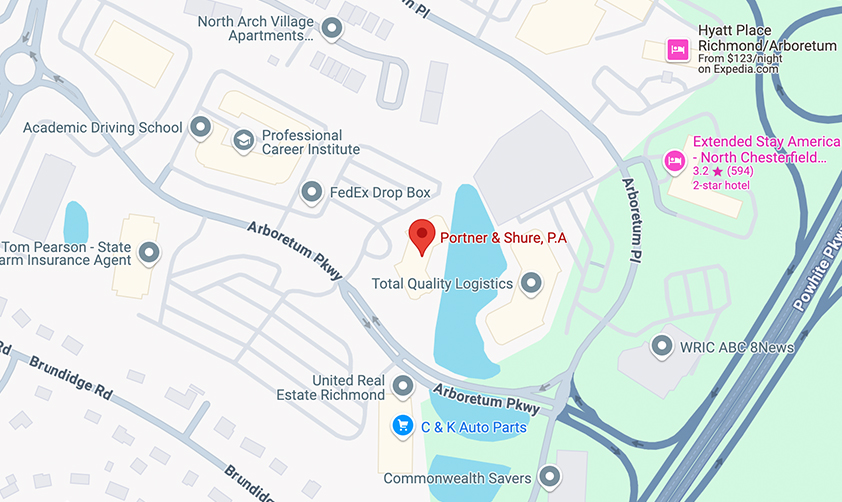
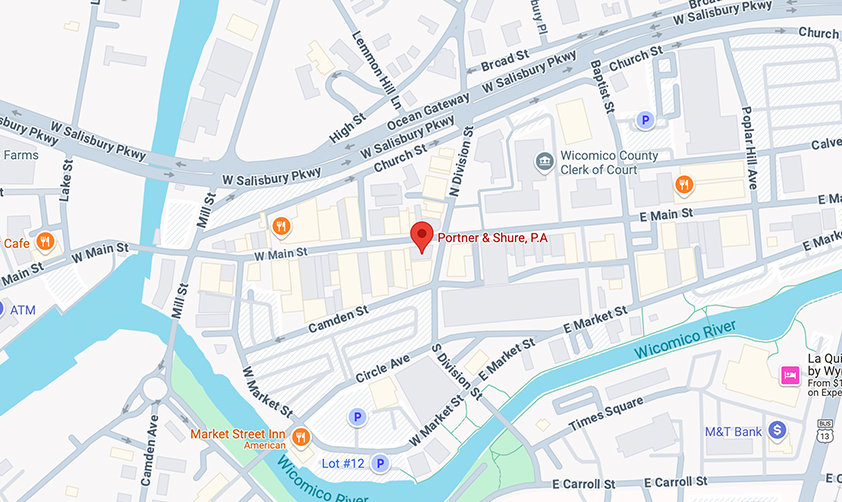
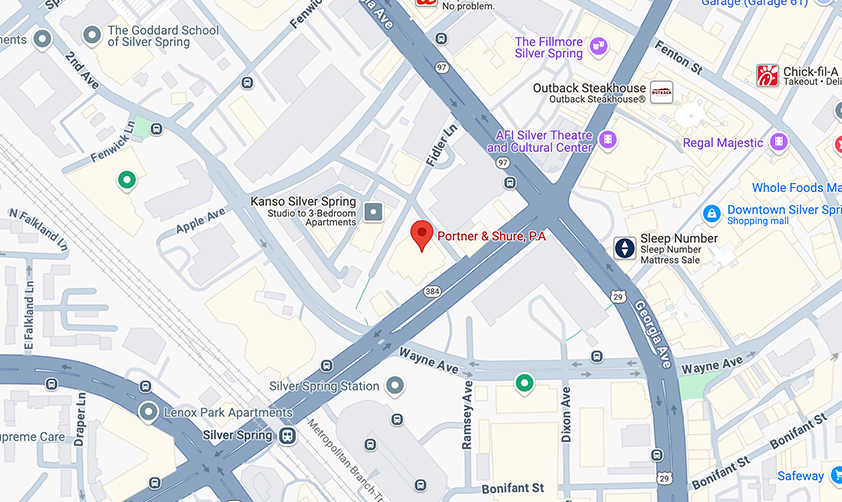
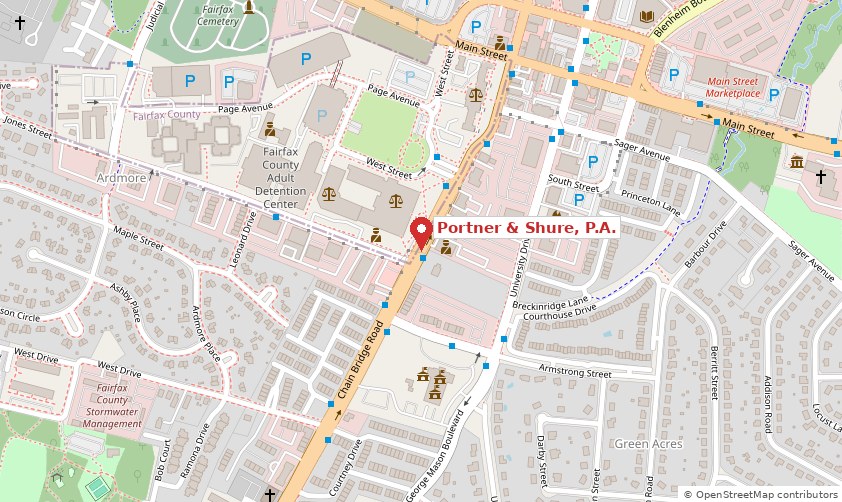
At Portner & Shure, P.A., our business immigration attorneys help Canadian and Mexican professionals and the U.S. employers who want to hire them determine eligibility, prepare the supporting documentation, and navigate the application process at the border, at a consulate, or through USCIS. Call us today at (410) 995-1515 to schedule a consultation.
What Is a TN Visa?
The TN visa is a nonimmigrant classification that permits qualified citizens of Canada and Mexico to enter the United States temporarily to work in certain professional occupations. It was created under the North American Free Trade Agreement (NAFTA) and continued when USMCA replaced NAFTA on July 1, 2020. USMCA kept the same list of qualifying professions and the same core eligibility framework that existed under NAFTA, and the classification is still referred to as "TN" status.
Unlike many other U.S. work visas, the TN category has no annual numerical cap and no lottery. If an applicant's occupation, credentials, and job offer meet USMCA's requirements, there is no waiting for a limited number of visas to become available, as is the case with the H-1B visa.
Learn more about our immigration services and how our attorneys guide clients through employment-based visa options, including the TN classification.
Who Qualifies for a TN Visa? USMCA Professional Occupations
To qualify for TN status, an applicant's position must fall within one of the professional occupations set out in USMCA and detailed in the USCIS Policy Manual's requirements for specific occupations. Each listed profession comes with its own minimum credential, such as a specific degree, a professional license, or a combination of post-secondary training and experience.
The USMCA professional occupations list spans a wide range of fields, including:
- Science and engineering, such as engineers, scientists, and geologists
- Healthcare, such as registered nurses, dentists, pharmacists, and veterinarians, generally with a state or provincial license
- Education, such as college and university teachers
- Business and accounting, such as accountants, economists, and management consultants
- Legal professionals, such as lawyers
- Other technical and professional roles, such as computer systems analysts and certain scientific technicians and technologists
According to USCIS policy guidance, a job title alone does not establish eligibility. What matters is whether the actual duties of the position match a listed profession and require the corresponding degree, license, or credential. An applicant whose job title sounds close to a listed occupation can still be denied if the real day-to-day duties do not match.
TN Visa Eligibility Requirements
In addition to working in a qualifying profession, a TN applicant must meet several other core requirements:
- Be a citizen of Canada or Mexico (lawful permanent residents of either country do not qualify for TN status)
- Have a prearranged, full-time or part-time job offer from a U.S. employer or entity
- Hold the degree, license, or other credential specifically required for that profession under USMCA
- Intend to work only in the professional occupation for which TN status is requested
- Be entering the U.S. for a temporary period, not to establish permanent residence
Our business immigration attorneys work with both employers and applicants to confirm, before filing, that the position and the applicant's credentials genuinely match a listed USMCA profession.
Applying for a TN Visa: Process for Canadian and Mexican Citizens
The application process differs depending on whether the applicant is a citizen of Canada or Mexico.
Canadian citizens are visa-exempt and generally do not need to obtain a TN visa stamp at a U.S. consulate. Instead, a Canadian citizen can present the required job offer letter, evidence of credentials, and supporting documentation directly to a U.S. Customs and Border Protection (CBP) officer, either at a land port of entry or at a U.S. preclearance location inside a Canadian airport. If approved, the CBP officer admits the applicant in TN status on the spot. Canadian citizens and their employers also have the option of filing Form I-129 with USCIS in advance to seek pre-approval before traveling.
Mexican citizens must obtain a TN visa before seeking admission to the United States. This means applying at a U.S. embassy or consulate, which typically involves completing the online DS-160 nonimmigrant visa application, attending a consular interview, and providing the same type of job offer and credential documentation a Canadian applicant would present at the border. Once the visa is issued, the applicant still must be admitted into the U.S. in TN status at a port of entry.
TN Visa Validity and Renewal
A TN visa is initially granted for a period of up to three years. Unlike some other work visa categories, there is no fixed maximum number of years a person may hold TN status. TN status can be extended in additional increments of up to three years, and there is no limit on the total number of extensions a qualified applicant may obtain, as long as the underlying job offer, occupation, and credentials continue to satisfy USMCA's requirements.
One important limitation applies at every entry and every renewal: the TN visa is not a dual-intent category. Unlike the H-1B or L-1 visa, TN status does not allow an applicant to simultaneously hold an intent to immigrate permanently to the United States. Each time a TN holder seeks admission or requests an extension, the applicant must be prepared to show that their stay remains temporary and that they do not intend to abandon their residence abroad. Taking steps toward permanent residence while in TN status can raise questions about whether this nonimmigrant intent requirement is still being met.
Bringing Family Members: TD Status for Spouses and Children
The spouse and unmarried children under 21 of a TN visa holder may accompany or follow to join the principal applicant in TD (TN-Dependent) status. TD status generally tracks the same period of admission as the principal TN holder, and dependent children may attend school in the United States at any level.
Unlike some other dependent categories, TD status does not, by itself, authorize employment. A spouse in TD status who wants to work in the United States must separately obtain a work-authorized immigration status, such as by changing to another employment-based classification. This is an important distinction to plan around before relocating as a family.
Benefits of the TN Visa
For qualified Canadian and Mexican professionals, the TN visa offers several practical advantages:
- No annual cap or lottery, unlike the H-1B visa
- A comparatively fast application process, particularly for Canadian citizens applying at the border or at preclearance
- Status that can be renewed repeatedly, with no set limit on the number of extensions
- The ability to bring a spouse and unmarried children under 21 in TD status
- Flexibility to change employers by having the new employer file a new TN application or petition
Considering a TN visa? Portner & Shure, P.A. can help you confirm your occupation qualifies and that your application is built to withstand scrutiny at the border, at a consulate, or with USCIS. Contact our immigration attorneys to discuss your options.
Common Challenges in TN Visa Applications
The TN process can look simple on paper, but applications are frequently delayed or denied over avoidable issues. Common challenges include:
- Holding a degree or credential that does not match what USMCA requires for the specific listed occupation
- A job offer letter that is too vague about the position's actual duties, salary, and expected length of employment
- A job title that does not clearly correspond to any profession on the USMCA list, without an explanation tying the real duties to a qualifying category
- Job duties that, in practice, do not match the professional-level occupation claimed in the application
- Failing to show nonimmigrant intent at the border, at a consular interview, or when requesting an extension, since the TN visa is not a dual-intent classification
- Assuming a spouse in TD status can automatically work without separately obtaining employment authorization
These issues can lead to requests for additional documentation, denial at the port of entry, or a refused visa at the consulate. Working with an experienced TN visa attorney before filing helps avoid these outcomes.
How a TN Visa Lawyer Can Help
An attorney from Portner & Shure, P.A. can review your occupation, credentials, and job offer against USMCA's requirements before you ever present yourself at the border or a consulate. We help employers draft job offer letters that clearly describe duties and tie them to the correct USMCA profession, and we help applicants gather the credential evaluations and supporting evidence adjudicators expect to see.
Our business immigration attorneys also assist with TN extensions, changes of employer, and planning around the nonimmigrant intent requirement, including for professionals who may eventually want to pursue a different, dual-intent visa category.
Our firm brings deep experience in business immigration matters and works closely with both individual professionals and the U.S. employers who sponsor them. Call us today at (410) 995-1515 to talk through your TN visa options.
Speak to a TN Visa Lawyer Today
Whether you are exploring TN eligibility for the first time, preparing a job offer letter for a Canadian or Mexican employee, or approaching a TN renewal, Portner & Shure, P.A. is ready to help. Our immigration attorneys can walk you through your options and build the strongest possible application on your behalf.
Contact us today at (410) 995-1515 and take the first step toward putting your USMCA professional status on solid ground.