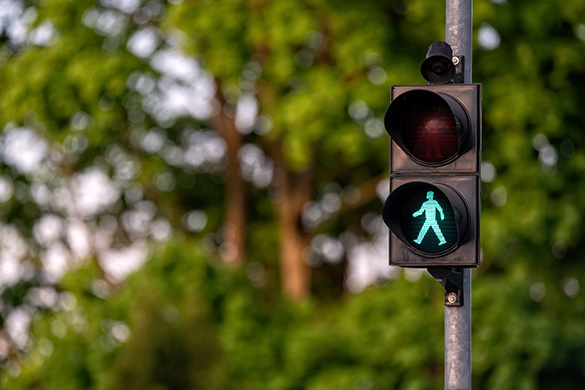
Pedestrian accidents can cause life-changing injuries, and questions of fault are often more complicated than they first appear. Crosswalk location, traffic signals, driver conduct, roadway conditions, and the negligence laws of the state where the crash occurred can all affect an injury claim.
Portner & Shure, P.A. represents injured pedestrians and families throughout Maryland, Virginia, Washington, D.C., North Carolina, and Kentucky. Our attorneys investigate the collision, preserve available evidence, and pursue compensation from negligent drivers and other responsible parties. Contact us today at (410) 995-1515 to discuss your claim.
Why Choose Portner & Shure, P.A. for Your Pedestrian Accident Claim
Pedestrian accident cases require more than proving that a crash occurred. Our attorneys focus on the facts that establish how a driver’s negligence caused the collision and the full effect the injuries have had on the victim and family.
When you hire Portner & Shure, P.A., our team can:
- Investigate the crash scene, roadway layout, signals, crosswalks, lighting, and traffic patterns
- Obtain police reports, surveillance footage, dashcam footage, and available traffic-camera evidence
- Interview witnesses and preserve testimony while memories are fresh
- Review phone records, toxicology evidence, vehicle data, and other proof of distracted or impaired driving when appropriate
- Work with medical providers and experts to document the full extent of injuries and future care needs
- Calculate losses such as medical expenses, lost income, diminished earning capacity, pain and suffering, and wrongful death damages
- Negotiate with insurers and prepare cases for trial when a fair settlement is not offered
Insurance companies may move quickly after a pedestrian crash, particularly when they believe they can argue that the pedestrian shares blame. Do not assume an adjuster’s version of fault is final.
Types of Pedestrian Accident Cases We Handle
Pedestrian accidents can happen in many settings and may involve more than one contributing factor. Portner & Shure, P.A. investigates the circumstances of each crash to identify negligent drivers, unsafe conditions, and all available sources of compensation.
Crosswalk and Intersection Collisions
Drivers must remain alert for pedestrians at marked and unmarked crosswalks, intersections, school zones, transit stops, parking-lot entrances, and other areas where people are likely to walk. A driver who turns without checking for someone in a crosswalk, runs a red light, or fails to yield may be responsible for the resulting injuries.
Distracted and Impaired Driving Accidents
Texting, using a navigation system, eating, adjusting controls, or otherwise taking attention from the road can leave a driver unable to see a pedestrian in time to stop. Alcohol and drug impairment can similarly affect reaction time, judgment, coordination, and vision. Evidence of distraction or impairment may be central to proving fault.
Failure-to-Yield Accidents
Many pedestrian crashes occur when a driver turns at an intersection, enters or exits a driveway, backs out of a parking space, or fails to yield where the law requires the driver to do so. A driver’s duty to use reasonable care may continue even when a pedestrian is not in a painted crosswalk.
Hit-and-Run Pedestrian Accidents
A driver who leaves after striking a pedestrian may face serious legal consequences, but locating that driver is only one part of a civil claim. Depending on the circumstances and available coverage, an injured pedestrian may also have a claim through uninsured motorist coverage, a household member’s policy, or another applicable insurance policy.
Accidents Involving Poor Road Design or Faulty Signals
Some pedestrian accidents involve dangerous conditions beyond driver error. Poor lighting, obstructed sightlines, missing signage, malfunctioning signals, inadequate crosswalk placement, unsafe road design, or construction-zone hazards can contribute to a collision. Claims against governmental entities or contractors may involve special notice requirements and short deadlines, so quick legal review is important.
If you were struck while walking, do not wait for an insurer to decide who was at fault. Call Portner & Shure, P.A. at (410) 995-1515 to discuss the facts of your case.
How Negligence Laws Affect Pedestrian Claims
Fault in a pedestrian accident is not always limited to one person. Drivers, pedestrians, vehicle owners, employers, government entities, and others may each play a role. State negligence laws determine whether an injured person can recover damages when the defense alleges that the pedestrian contributed to the accident.
Contributory Negligence in Maryland, Virginia, and Washington, D.C.
Maryland and Virginia generally apply contributory negligence rules. If an injured pedestrian is found to have contributed to the collision, recovery may be barred, subject to the facts of the case and any applicable legal defenses.
Washington, D.C. applies a different statutory framework to qualifying collisions involving pedestrians and other vulnerable road users. Fault issues should be evaluated under the specific facts of the case and applicable law.
Because these rules can be unforgiving, insurers often examine whether the pedestrian used a crosswalk, obeyed traffic signals, entered the roadway suddenly, wore visible clothing, or acted in another way the insurer claims contributed to the crash. Those allegations do not automatically defeat a claim. The evidence may show that the driver had sufficient time to see and avoid the pedestrian, violated a traffic law, was distracted, or failed to maintain a proper lookout.
Vulnerable Road User Protections in Maryland and Washington, D.C.
Maryland law includes protections for vulnerable individuals, including pedestrians, and may impose enhanced penalties when a driver causes serious physical injury or death under circumstances covered by the statute. A traffic charge or conviction may be relevant evidence in a civil claim, but it does not by itself establish civil liability.
For qualifying collisions involving a pedestrian or other protected vulnerable road user, Washington, D.C. applies a statutory fault rule that may allow recovery when the injured person was partly at fault. Recovery may still be available when the pedestrian’s negligence was not greater than the combined negligence of all defendants responsible for the collision.
Contributory Negligence in North Carolina
North Carolina also generally applies contributory negligence principles. This means even a small allegation of fault can become a major issue in a pedestrian injury case. An attorney can evaluate whether the facts support a last-clear-chance argument or another available legal theory.
Comparative Negligence in Kentucky
Kentucky generally uses a pure comparative-fault system. An injured pedestrian’s recoverable damages may be reduced by their assigned percentage of fault rather than barred solely because they were partly responsible. For example, if a fact finder determines that a pedestrian sustained $100,000 in damages but was 20% at fault, the recovery may be reduced by $20,000.
The applicable rule depends on where the collision occurred, not where the injured person lives. This is one reason it is important to speak with a lawyer familiar with the state where the accident happened.
Understanding Crosswalk Right-of-Way and Pedestrian Duties
Crosswalks can be important evidence in a pedestrian accident case, but the absence of painted lines does not necessarily resolve right-of-way questions. In Maryland, crosswalks may be marked or unmarked. Whether an unmarked crosswalk exists and whether a driver or pedestrian had the right-of-way depends on the roadway configuration and the applicable law.
Pedestrians should use crosswalks when available, follow pedestrian-control signals, avoid crossing diagonally unless permitted, and remain attentive to traffic. Drivers must also exercise reasonable care and remain alert for pedestrians. A driver’s claim that a pedestrian was difficult to see or was outside a painted crosswalk does not automatically resolve fault; visibility, lighting, speed, traffic signals, driver attention, and pedestrian conduct may all be relevant.
For example, a driver turning right on a green light may focus on approaching vehicles and fail to look for a pedestrian lawfully crossing with a walk signal. A green traffic signal does not necessarily resolve fault when a turning driver fails to yield or maintain a proper lookout.
Common Injuries in Pedestrian Accidents
A pedestrian may be thrown onto a vehicle, onto the pavement, or into another lane of traffic. Even a collision at a relatively low speed can cause severe injuries. Common injuries include:
- Traumatic brain injuries and concussions
- Spinal cord injuries, herniated discs, and paralysis
- Broken legs, arms, hips, ribs, and facial bones
- Knee, ankle, shoulder, and soft-tissue injuries
- Internal bleeding and organ damage
- Abrasions, road rash, lacerations, scarring, and disfigurement
- Psychological injuries, including anxiety, depression, and post-traumatic stress
- Fatal injuries that may give rise to a wrongful death claim
It is important to seek medical care promptly, follow treatment recommendations, and retain records related to your injuries and expenses. Some serious injuries, particularly brain injuries and internal trauma, may not be immediately obvious at the scene.
Compensation Available to Injured Pedestrians
The value of a pedestrian accident claim depends on the severity of the injuries, available insurance coverage, liability evidence, the effect on the person’s ability to work, and the law of the state where the crash occurred. Compensation may be available for:
- Emergency treatment, hospitalization, surgery, medication, rehabilitation, and future medical care
- Lost wages and reduced future earning capacity
- Physical pain, emotional distress, and loss of enjoyment of life
- Permanent disability, scarring, and disfigurement
- Mobility equipment, in-home care, and necessary home or vehicle modifications
- Property damage, such as damage to a phone, glasses, bicycle, or other personal items
- Wrongful death damages when a pedestrian is killed
A claim evaluation should account for current losses and reasonably anticipated future consequences of the accident. Accepting a settlement before the full medical picture is known may leave an injured person without compensation for later treatment, lost income, or other future losses.
What to Do After a Pedestrian Accident
Your health comes first. If you are physically able, taking a few additional steps can help protect a future injury claim. At Portner & Shure, P.A., we recommend taking these steps:
- Call 911 and request police and emergency medical assistance.
- Get medical attention, even if symptoms initially seem minor.
- Obtain the driver’s name, contact information, license information, insurance details, and vehicle description if possible.
- Take photos or videos of the intersection, crosswalk, traffic signals, vehicle damage, injuries, weather, lighting, and road conditions.
- Get names and contact information for witnesses.
- Be careful when discussing the accident with an insurance company. Speak with an attorney before giving a recorded statement or accepting a settlement offer.
- Keep medical bills, discharge paperwork, prescription receipts, employment records, and all accident-related communications.
- Contact an attorney as soon as possible so evidence can be preserved.
How Our Attorneys Build Your Pedestrian Accident Case
Our lawyers begin by examining the precise location and sequence of events. In a crosswalk case, that may include confirming whether the pedestrian had a walk signal, determining the driver’s direction of travel, reviewing turning movements, and documenting whether the driver had an unobstructed view.
We also investigate the driver’s conduct. Evidence may reveal speeding, distracted driving, impaired driving, unsafe backing, a failure to yield, or a violation of another traffic law. When necessary, we may consult accident reconstruction professionals, medical experts, and vocational experts to present a clear account of both liability and damages.
Our goal is to build a claim supported by the available evidence and present a clear account of liability and damages. To discuss the evidence in your pedestrian accident case, contact Portner & Shure, P.A. at (410) 995-1515.
Time Limits for Filing a Pedestrian Accident Claim
Pedestrian injury claims are subject to filing deadlines that vary by state and by the type of defendant involved. Claims against government agencies, public transit entities, or other public bodies may require notice well before the ordinary statute of limitations expires.
Waiting can also make a case harder to prove. Surveillance recordings may be erased, physical evidence can be lost, witnesses become difficult to locate, and memories fade. A timely consultation gives your attorney the best opportunity to preserve key evidence.
Contact Our Pedestrian Accident Lawyers Today
If you or someone you love was injured while walking, you do not have to handle the insurance process alone. Portner & Shure, P.A. represents pedestrians and families facing serious injuries, financial stress, and difficult questions about fault after a crash.
Contact Portner & Shure, P.A. today at (410) 995-1515 for a free consultation. Our team can review what happened, explain the next steps, and help you pursue accountability from the responsible party.
Pedestrian Accident FAQs
Who is at fault if a pedestrian is hit outside of a crosswalk?
The driver may still be at fault, the pedestrian may share fault, or both parties may have contributed. The answer depends on details such as vehicle speed, visibility, traffic signals, the location of the collision, whether the driver was distracted, and whether either person violated a traffic law. In Maryland, Virginia, and North Carolina, even an allegation that the pedestrian contributed to the crash can be especially consequential because of contributory negligence rules.
What if the driver who hit me fled the scene?
Call the police immediately and obtain medical treatment. If possible, gather witness names, security-camera information, and any details about the vehicle, including its make, model, color, license plate, or direction of travel. A hit-and-run claim may involve uninsured motorist coverage, even if the driver is never identified.
What is my pedestrian accident claim worth?
There is no standard value. The amount depends on the nature and permanence of your injuries, medical expenses, lost earnings, available insurance, evidence of fault, and the negligence laws that apply where the accident happened. An attorney can evaluate your losses and the available evidence before advising whether an insurer’s offer is reasonable.
Do I have a case if a loved one was killed in a pedestrian accident?
You may have a wrongful death claim and, in some cases, a separate survival claim. Recoverable damages can vary by state, but may include funeral expenses, medical bills, lost financial support, and the losses suffered by qualifying family members. Speak with Portner & Shure, P.A. promptly to understand the deadlines and legal options that may apply.