Menu
Book a Free Consultation
(410) 995-1515Available 24/7 Free Consultation
(410) 995-1515
If you have an immigration case pending with the U.S. Citizenship & Immigration Services (USCIS) in 2026, you already know that waiting is one of the hardest parts of the process. What you may not know is exactly how long the wait is for your specific form, why delays are happening, and if anything can be done to quickly move things forward. Processing times vary significantly by form, category, and service center, and the current policy environment has added new layers of uncertainty that make experienced legal guidance more valuable than ever.
At Portner & Shure, P.A., our immigration attorneys serve clients across Maryland, Virginia, and Washington D.C., helping families, employees, and individuals navigate the immigration process with clarity. If you have questions about your case timeline or options, call us at (410) 995-1515.
USCIS continues to manage a record backlog across all form types, driven by sustained high application volumes, staffing limitations, and ongoing technology modernization. Many factors may affect how long it takes USCIS to complete an application, petition, or request. These include the number of applications received, the complexity of individual cases, Requests for Evidence that require applicant responses, and policy-driven holds that have become a significant factor in 2026.
Incomplete applications remain one of the most avoidable sources of delay. A Request for Evidence adds weeks or months to any case timeline, and the current environment leaves very little margin for error in how petitions are prepared and documented. Our employment-based immigration team and DACA attorneys help clients file complete, well-supported petitions the first time.
One of the most significant developments affecting USCIS processing in 2026 is Policy Memorandum PM-602-0194, which took effect on January 1, 2026.
The Department of Homeland Security paused the review of all pending applications for visas, green cards, citizenship, or asylum from nationals of an expanded list of countries, and the memo outlines plans to re-review applications of nationals from these countries as far back as 2021.
USCIS stated that the purpose of the hold is to ensure that nationals from high-risk countries do not pose risks to national security or public safety. The expanded list covers nationals of 39 designated countries. For applicants from those countries, even cases that are otherwise approvable may be paused pending additional security review, and previously approved benefits may be subject to re-examination.
USCIS also continues to pause processing of all Form I-589 asylum applications, regardless of country of citizenship or birth. Our asylum attorneys, deportation defense lawyers, and removal defense team are closely monitoring these developments and advising affected clients on all available options.
The figures below reflect current USCIS processing time estimates as of March 2026. These are estimates based on recently completed cases and are subject to change.
The processing time displayed on the USCIS website represents the amount of time it took USCIS to complete 80% of adjudicated cases over the last six months. Your individual timeline may vary based on your service center, case category, and any policy holds that may apply.
The N-400 Application for Naturalization is currently processing at approximately 5 to 7 months at the national median, though times vary significantly by field office. Applicants in high-volume offices in the DMV region should check the USCIS processing times tool using their specific field office for the most accurate estimate.
Nationals from designated high-risk countries may face significantly longer waits or indefinite delays due to the January 2026 policy memorandum discussed above. Our citizenship attorneys can help you understand how current policy may affect your naturalization timeline.
Form N-600, the Certificate of Citizenship application, currently processes in approximately 9 to 11 months depending on the field office. N-600 applications are generally exempt from the high-risk country adjudication hold, with the exception of nationals from Yemen and Somalia.
For immediate relatives of U.S. citizens, the I-130 is currently processing at approximately 14.5 months when applying from outside the U.S., and approximately 8.2 months when applying from within the U.S. and filed together with Form I-485.
This covers the petition stage only. Additional time for consular processing or adjustment of status must be factored into the total wait. Our family visa lawyers and family-based immigration team can help structure your petition for the strongest possible outcome.
When a lawful permanent resident rather than a U.S. citizen is sponsoring a relative, processing times run longer and total wait times are significantly extended due to annual visa availability limits for family preference categories. Spouses and children of permanent residents fall under the F2A preference category, which is subject to per-country backlogs that can add years to the overall timeline beyond the initial petition processing window.
Form I-485 processing times vary widely depending on the underlying petition category, service center, and current caseload. Family-based adjustment cases are processed at approximately 10 to 13 months at the median, while employment-based cases can run considerably longer depending on visa availability and priority date.
USCIS does not include visa-regressed I-485 cases in its processing time calculations. USCIS applicants should also be aware that the new Form I-485 version released in late 2024 requires concurrent filing of the medical examination on Form I-693.
Form I-765 for employment authorization is one of the faster-processing forms at USCIS, currently running approximately 2 to 3 months for most categories.
Applicants who are renewing and filed before their current EAD expired benefit from an automatic 180-day extension while the renewal is pending. Applicants from high-risk countries may experience holds that affect this form as well.
I-140 processing times vary by category and service center, generally running between 4 and 8 months for non-premium cases. EB-1 extraordinary ability cases, EB-2, and EB-3 visas qualify for premium processing of the I-140, which provides 15-business-day processing.
EB-1 multinational manager and EB-2 National Interest Waiver cases also qualify for premium processing but with a 45-business-day window. Our business immigration attorneys, H-1B visa lawyers, and L-1 visa attorneys work with employers and employees to maximize the use of premium processing where available.
One of the most consequential decisions in an employment-based immigration case is whether to use premium processing.
Standard processing means your petition enters the regular USCIS queue and is adjudicated in the order it is received, subject to the current backlog at the relevant service center.
Premium processing, available for eligible I-140 and I-129 categories, is an entirely different track. USCIS guarantees action on the petition within a defined window, either 15 business days for most categories or 45 business days for EB-1 multinational manager and EB-2 National Interest Waiver cases. That action may be an approval, a denial, or a Request for Evidence, but it moves the case out of the general queue and into priority review.
Effective March 1, 2026, USCIS raised premium processing fees for Forms I-129 and I-140 to $2,965. This is a meaningful increase from the prior fee, and it applies to all petitions postmarked on or after that date.
While many factors affecting your timeline are outside your control, there are meaningful steps that can improve your position. By hiring a dedicated immigration attorney from Portner & Shure, P.A., we can help with:
USCIS processing times are moving targets, and the 2026 policy environment has made individual case strategy more important than ever. A missed fee update, an incomplete form, or failure to account for a policy hold affecting your country can set your case back by months or longer. Having experienced immigration attorneys review your situation before you file, and advocate on your behalf when delays arise, makes a real difference in outcome.
Portner & Shure P.A.’s immigration team serves clients across Maryland, Virginia, and Washington D.C. with a full range of immigration services. Whether you are navigating a family petition, an employment-based visa, an asylum claim, or a removal proceeding, our attorneys stay current on USCIS policy changes and apply that knowledge directly to how we prepare and manage every case.
Contact Portner & Shure, P.A. at (410) 995-1515 to speak with an immigration attorney today.
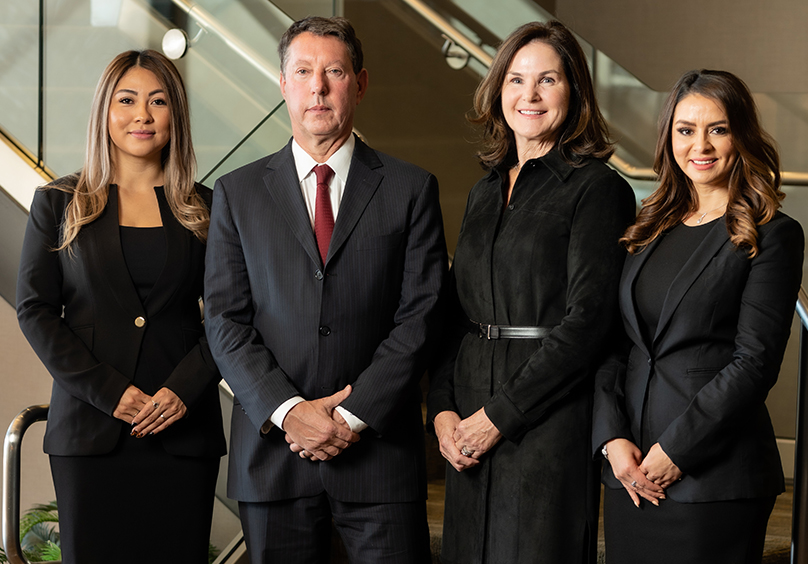

Expect More with
Portner & Shure
The legal system can be intimidating, but you deserve more. Expect more guidance, more dedication, and more results from our experienced trial attorneys every step of the way.